

News Center
Education News
Insurance Guide
Brand News
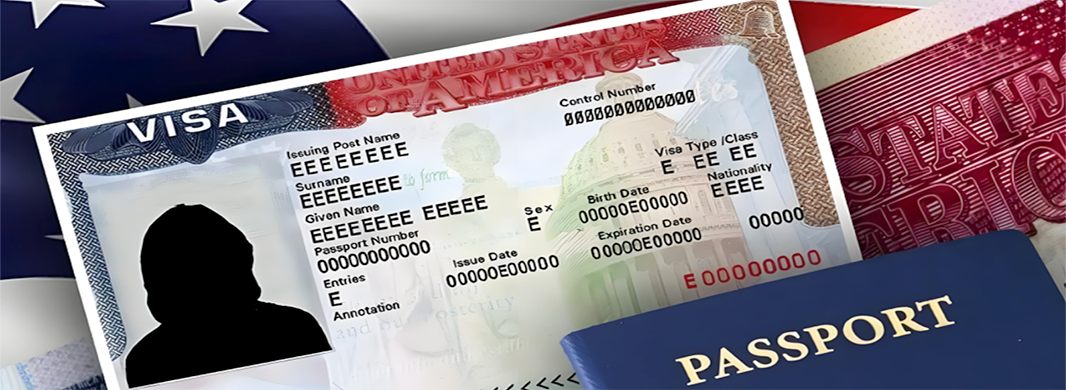
The major adjustment of the US visa renewal policy has shortened the time limit for face-to-face communication to 12 months!
On February 14, 2025, the US visa renewal policy underwent significant changes: the time limit for visa renewals without face-to-face communication was reduced from the original 48 months to 12 months. This policy adjustment takes immediate effect and directly affects applicants holding non immigrant visas, including common B1/B2 tourist visas and H-1B work visas.According to a report by the Economic Times, applicants who have previously obtained a US visa in their domestic jurisdiction can enjoy the convenience of visa extension without face-to-face communication before the visa expires or within 48 months of expiration. However, starting from February 14, 2025, the renewal period has been shortened to 12 months. Although the Visa Application Centers (VACs) have not yet officially announced this change, the visa application system has been updated to clearly state that the "face-to-face interview free" renewal must meet the condition that "the previous visa expiration time does not exceed 12 months".Image source: https://www.ustraveldocs.com/cn/zh/renew-visa Since the United States introduced a ten-year visa in 2014, the first batch of applicants' visas have expired in 2024. This policy adjustment means that if the visa expires for more than 12 months, the applicant will not be able to enjoy the convenience of visa renewal without an interview and must make a new appointment for an interview. This undoubtedly increases the complexity and time cost of renewal.Applicable population and conditions for visa renewal without face-to-face communicationintended for:-Must be a Chinese citizen or have Chinese resident status;-Currently, one must be within the territory of China;-The previous visa is still valid or has expired for no more than 12 months, and the original document can be provided;-Age ≥ 14 years old at the time of first visa application, fingerprints have been collected;-Apply for the same type of visa (such as B1/B2 to renew B visa);-The visa is issued by the US consulate in mainland China or Hong Kong;-There is no record of other types of visa applications being rejected;-There is no record of being denied entry into the United States or deported in advance;-Has not violated any immigration or other laws in the United States;-Since the last visa application, there have been no changes in name, nationality, or gender.Additional requirements for special groups:-F-1 students: need to continue their studies in the same school and program (I-20 is consistent with the old visa);-J-1 Exchange Scholar: Need to continue the same institutional project (DS-2019 is consistent with the old agreement);-H-1B work visa: must be employed by the original employer (I-797 is consistent with the old visa);-Children under 14 years old: At least one parent must hold a US visa in order to qualify for visa interview exemption.After renewal, it is necessary to update the EVUS (Electronic Visa Update System) in a timely manner. If EVUS expires or is not updated in a timely manner, even if holding a valid US visa, entry may still be denied.
 2025-02-26

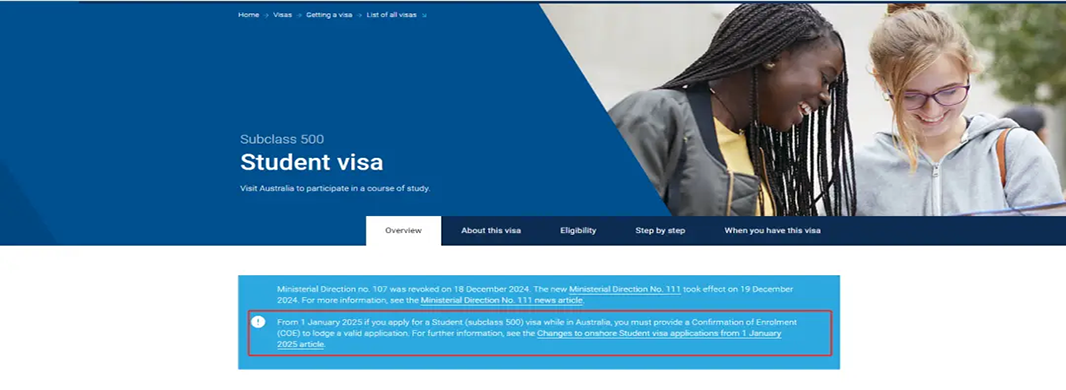
New regulations for Australian student visas: Starting from 2025, domestic applications must provide a Confirmation of Enrollment (CoE) letter
2025-02-26
Australia's study abroad policy tightens: International student quota reduction by 2025, University of Sydney and University of New South Wales adjust enrollment policies
2025-02-21